
What is a Psychometric Test & Its Purpose


Cracking the Code of Selection—Psychometric Style
Whether you’re trying to land your dream job or secure a spot in that perfect postgrad program, the selection game has changed—and psychometric tests are front and center.
Gone are the days when your grades and a good old-fashioned interview were enough. Today, institutions and employers alike are turning to psychometric assessments to dig deeper. Why? Because they want to see how you think, adapt, and work under pressure—not just how well you can recite your resume.
From top universities to global companies, psychometric testing is becoming the secret ingredient in shortlisting candidates. According to research by the British Psychological Society, psychometric tools are used in over 70% of graduate recruitment processes and are increasingly being adopted by universities to match students with courses that align with their aptitude and learning style. In short, it’s not just about what you’ve done, but how your brain is wired for what’s next.
What is a Psychometric test?
Psychometric tests are scientific tools designed to measure a person’s mental capabilities, personality traits, and behavioural style. They help assess how someone might perform in a specific job or academic setting—not just based on marks, but based on how they think, react, and solve problems.
Why Are Psychometric Tests Used?
- Employers use them during campus placements or graduate hiring to find candidates who are not only smart but also the right fit for their teams.
- Universities and counsellors use them to help students understand their strengths and suggest suitable career paths.
- You can use them to learn more about yourself—what motivates you, how you handle stress, or what kind of roles you’d thrive in.
Two Main Types of Psychometric Tests:
- Aptitude Tests – Measure logical reasoning, verbal ability, math skills, etc.
Example: A tech company might test your problem-solving speed before an interview. - Personality Tests – Reveal traits like introversion/extroversion, risk-taking, and emotional intelligence.
Example: An advertising firm might look for creativity and openness to new experiences.
When Riya, a final-year B.Tech student, applied for a management trainee position at a top FMCG company, she breezed through the initial resume screening. But the next step was a numerical reasoning test—a psychometric filter used to assess her ability to work with data under pressure.
Despite being great with people and interviews, she didn’t clear the test. Why? She hadn’t practised mental math or time-bound logic problems in ages.
Lesson: These tests aren’t just “add-ons”—they’re often gatekeepers to the next round.
Not Just for Jobs: Universities Use Them Too
Psychometric assessments are also making waves in education. Many business schools, design institutes, and even career counselling platforms use them to help students discover the right course or stream.
Example:
The UK-based platform UCAS has partnered with psychometric services to guide students toward courses that match their aptitude and personality style. Someone scoring high in spatial reasoning and visual thinking might be recommended for architecture or UI/UX design, while a strong verbal profile could lead to law, journalism, or public policy.

What Are the Different Types of Psychometric Tests?
Psychometric tests aren’t one-size-fits-all—they come in different flavors, each designed to measure a specific part of your potential. Some test how you think, some how you react, and others how you communicate under pressure.
Let’s break them down:
Cognitive Tests
What they measure: General mental ability—your problem-solving skills, logical reasoning, memory, and information-processing speed.
Where you’ll see them: Graduate aptitude tests, entrance exams (like GRE, GMAT), and job assessments across industries.
Example:
Imagine being asked to rotate a 3D cube in your mind or find the missing pattern in a matrix. These questions aren’t about what you studied—they’re about how fast and accurately you can think.
Fun fact:
Studies show that cognitive ability is one of the best predictors of job performance, especially in complex roles. (Source: Schmidt & Hunter, 1998)
Personality Tests
What they measure: Your behavioural traits, emotional style, and how you interact with the world.
Where you’ll see them: Course/career counselling, HR assessments, team building, leadership programs.
Example:
The 16 Personalities Test (MBTI) or Big Five Model might ask:
“Do you enjoy group work?” or “Do you often make detailed plans?”
Your responses help recruiters or counsellors understand if you’re a team player, a thinker, a planner, or a risk-taker.
Real-life story:
When Neha applied for a Master’s in Organisational Psychology, her university used a Big Five personality test to check if she had high openness and empathy—key traits for someone aiming to work in HR or counselling roles.
Numerical Reasoning
What they measure: Your ability to interpret, analyse, and draw conclusions from numerical data—percentages, graphs, tables, ratios.
Where you’ll see them: Finance roles, analytics, consulting firms, data-driven graduate programs.
Example:
You’re given a bar graph showing sales across quarters and asked:
“If Q2’s sales increased by 25% over Q1, what is the percentage increase in total revenue?”
You usually have 60–90 seconds per question, so time pressure is real.
Pro tip:
Practising mental math and interpreting data visualisations can increase accuracy by 40%, according to AssessmentDay’s user surveys.
Verbal Reasoning
What they measure: Your ability to read, comprehend, and evaluate written information.
Where you’ll see them: Law firms, marketing and communications roles, editorial positions, and university admissions.
Example:
You might get a passage about environmental law and be asked:
“Which statement can be logically inferred from the text?”
The goal? To test critical reading—not just reading.
According to TargetJobs, 78% of graduate employers in the UK use verbal reasoning in their online assessments.
Situational Judgement Tests (SJTs)
What they measure: Your decision-making in real-life, work-like scenarios—ethics, leadership, time management, and conflict resolution.
Where you’ll see them: Management roles, teaching programs, healthcare admissions (like UCAT), and grad schemes.
Example:
“Your teammate missed a deadline. You’re behind on your work too. What do you do?”
Options may include:
- Speak to your manager
- Offer help despite your own workload
- Confront the teammate
- Do nothing
There’s no black-and-white answer—just what best reflects your professional judgment. Why they matter:
SJTs are often used to test emotional intelligence and culture fit, especially when technical skills alone don’t cut it.
A Graduate’s Guide to Preparing for Psychometric Assessments

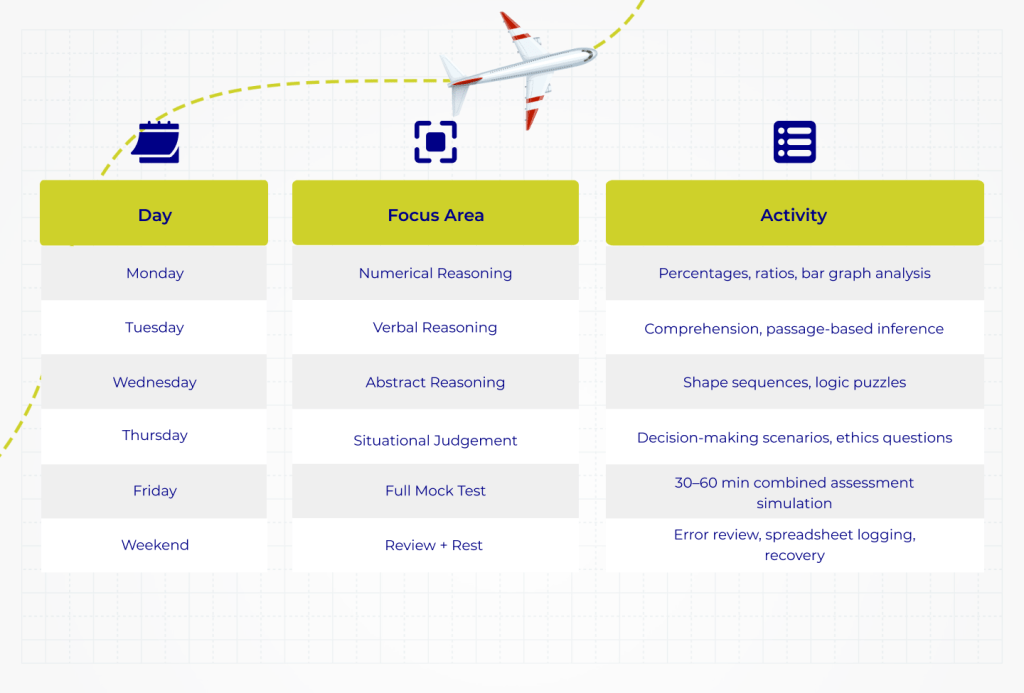
Suggested Weekly Psychometric Practice Plan:
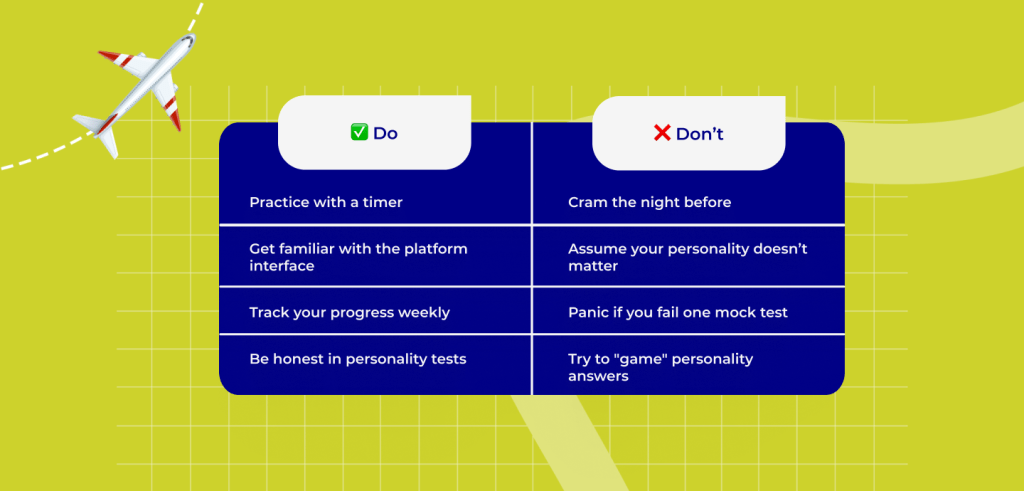
Quick Tips for Success
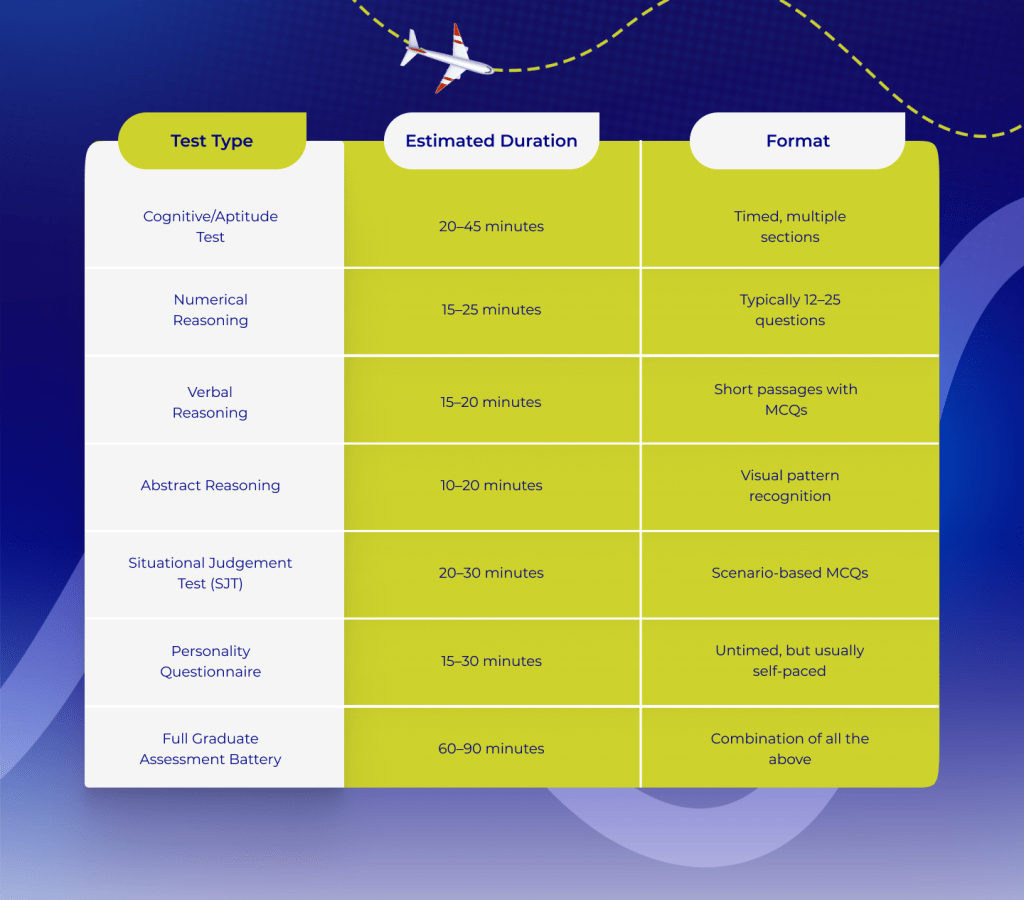
How long do psychometric tests last?
The time required to complete psychometric tests can vary based on the type of test and the platform administering it. Some tests are as quick as 10 minutes, while others can stretch up to an hour.
Here’s a breakdown of average durations by test type:
How do you pass a Psychometric test?
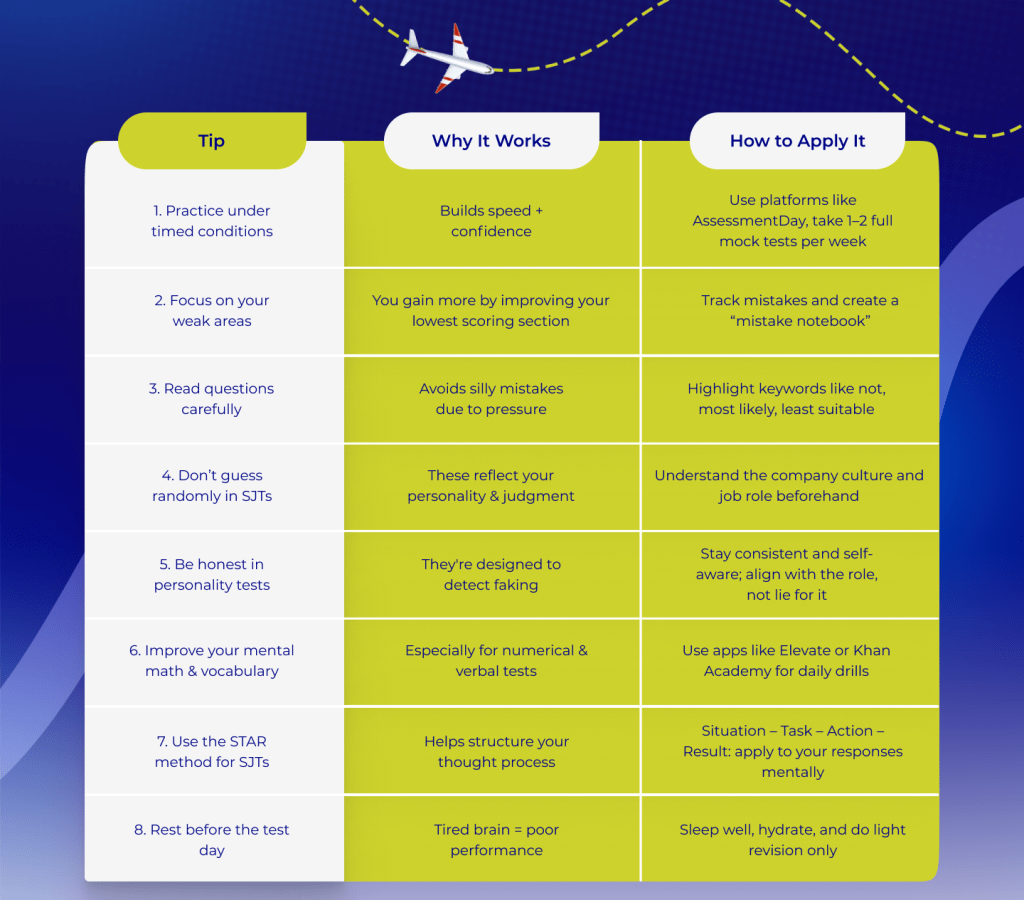
There’s no “cheat code,” but with smart preparation, you can absolutely ace your psychometric test and stand out from the crowd.
Tips to Ace a Psychometric Test
What Are the Advantages of Psychometric Tests?
Psychometric assessments aren’t just boxes to tick—they’re powerful tools for growth, decision-making, and self-awareness. Here are some benefits of psychometric tests for students and graduates:
Key Advantages:
- Career Clarity: Helps you understand your strengths, weaknesses, and suitable career paths.
- Course Alignment: Matches your personality and cognitive style with the right academic programs.
- Fair Evaluation: Offers an unbiased way for recruiters and universities to assess potential beyond grades.
- Self-Awareness: Boosts emotional intelligence and helps with personal development.
- Competitive Edge: Prepares you for real-world aptitude tests used in job selections and entrance exams.
Bonus: Regular practice sharpens your problem-solving, time management, and decision-making skills—essentials for any career.
What to Expect During a Psychometric Test?
Knowing what’s coming can reduce test-day stress. Here’s what a typical psychometric assessment looks like:
Typical Formats:
- Multiple-choice questions
- Timed sections (for aptitude-based tests)
- Untimed personality questionnaires
- Scenario-based simulations (in SJTs)
How are psychometric test scores calculated?
The scoring system varies by test type, but here’s a general breakdown:

Example:
If you scored 18/25 in a numerical test, your percentile score might be 78th percentile, meaning you performed better than 78% of test-takers.
Free Practice Psychometric Tests
Practice makes perfect! Here are some excellent free psychometric test resources:

Tip: Bookmark these and take one mock test per week as part of your prep schedule.
Conclusion
Psychometric tests are more than just checkboxes—they’re windows into your potential. Whether you’re applying for a job, choosing a course, or just trying to understand yourself better, these assessments can give you clarity and confidence.
From aptitude to personality and situational judgment, preparing for these tests the smart way puts you ahead of the game.
How GradPilots Helps You:
At GradPilots, we understand how overwhelming this journey can be. That’s why we offer free psychometric assessments on our website designed specifically for students and fresh graduates.
You can take our test in just 20 minutes and:
- Discover your unique strengths
- Get matched with career paths and courses
- Align your academic and professional goals with your personality
Head to GradPilots to start your psychometric journey today—and unlock the future that fits you best.
Frequently Asked Questions
Not necessarily—but it can be challenging if you’re unprepared. These tests are designed to push your limits in reasoning, decision-making, and time management. But with regular psychometric test practice, you’ll get faster and more confident.
Psychometric tests are used to assess a person’s cognitive abilities, personality traits, and behavioural tendencies. They’re commonly used in:
Job recruitment
Course or career matching
Self-assessment for personal growth
Free: Many online platforms like 123Test, GradPilots, and SHL offer free versions for practice or self-discovery.
Paid Tests: Professional or certified versions (like MBTI, Hogan, or SHL full assessments) can cost anywhere from ₹500 to ₹3000+, depending on the provider.
At GradPilots, our test is completely free for students.
Some major benefits of psychometric tests include:
Clear understanding of your personality and strengths
Matching careers or courses to your mindset
Improving performance in job assessments
Boosting confidence and self-awareness
Fair and bias-free evaluation method
It depends on the test type:
Numerical Reasoning: Percentages, ratios, graphs
Verbal Reasoning: Inferences from passages
Abstract Reasoning: Shape and pattern recognition
SJTs: Real-life decision-making scenarios
Personality: Agreement or disagreement with behavioural statements
Yes—when designed and administered properly, psychometric tests are scientifically validated, standardised, and fair across backgrounds. They remove interviewer bias and provide data-driven insights.
The most frequently used types include:
Numerical Reasoning
Verbal Reasoning
Abstract Reasoning
Situational Judgement Tests (SJTs)
Personality Questionnaires
Cognitive Ability Tests
Yes—most aptitude-based psychometric tests are strictly timed (e.g., 15–45 mins).
Personality tests, however, are usually untimed to reduce pressure and encourage honest answers.
On average:
Short test (1 section): 15–20 minutes
Full test (multiple sections): 60–90 minutes
Personality tests: 15–30 minutes (untimed)
You can’t really “fail,” especially in personality or SJT sections. However, low scores in aptitude tests may disqualify you for a role or course if they’re a key selection filter.
But remember: you can always retake, re-practice, and improve.
